March Madness betting rewards preparation, not impulse. The NCAA Tournament generates more wagers than almost any other sporting event in the United States, yet most bettors approach it without a structured framework. Understanding bet types, odds formats, sportsbook selection, and bankroll discipline separates profitable bettors from casual participants. What follows breaks down each component systematically, giving bettors the tools to engage with the tournament strategically rather than blindly.
Key Takeaways
- Create an account with a legal, state-licensed sportsbook like FanDuel or DraftKings, verifying your identity and location before depositing funds.
- Choose from five core bet types: moneylines, point spreads, over/under totals, prop bets, and futures for diverse wagering options.
- Understand odds formatting: negative numbers indicate favorites (-200), while positive numbers indicate underdogs (+150) and their respective payouts.
- Manage your bankroll by allocating only 1-5% per wager, tracking bets consistently, and avoiding impulsive increases during losing streaks.
- Research team matchups, monitor injury reports, and analyze historical trends to make informed betting decisions throughout the tournament.
What Is March Madness and How Does the Tournament Work?
March Madness is the colloquial name for the NCAA Men’s Basketball Tournament, a 68-team, single-elimination competition that crowns the national college basketball champion each year. The NCAA Tournament spans three weeks in March and April, producing 67 total games across four competitive regions. Each region’s winner advances to the Final Four, where semifinal and championship matchups determine the final national champion.
The field comprises 32 automatic bids, awarded to teams winning their respective conference tournaments, and 36 at-large bids, distributed based on regular season performance and overall résumé strength. Bettors and fans alike construct a bracket predicting every game’s outcome — a task of extraordinary difficulty. The estimated probability of a perfect bracket stands at 1 in 9.223 quintillion, underscoring the tournament’s fundamental unpredictability and competitive depth.
Choose a Legal Sportsbook Before the First Game Tips Off
Before placing a single wager on the tournament, bettors must obtain an account with a legal, state-licensed sportsbook. Sports betting is currently authorized in 30 states and Washington, DC, meaning state regulations directly determine access to NCAA basketball wagering options.
To create an account, bettors must verify their location and submit required identification. Leading sportsbook app platforms—FanDuel, DraftKings, and BetMGM—each provide competitive March Madness sign-up bonuses and diverse wagering options.
| Sportsbook | Sign-Up Bonus | Key Feature |
|---|---|---|
| BetMGM | $1,500 First Bet | Extensive legal sportsbook coverage |
| FanDuel | Varies by state | User-friendly sportsbook app |
| DraftKings | Varies by state | Deep sports betting markets |
Selecting the right platform before tip-off guarantees bettors capitalize on promotional offers during peak NCAA basketball competition.
March Madness Betting Types Explained
Five core bet types define the March Madness wagering arena: moneylines, point spreads, over/under totals, prop bets, and futures. Each serves a distinct strategic purpose within NCAA basketball betting.
Moneylines demand a straightforward winner selection. Point spreads introduce margin requirements, compelling favorites to win decisively for bettors to collect. Over/under totals shift focus entirely to combined scoring output, independent of which team wins.
Moneylines pick winners. Spreads demand decisive victories. Totals ignore the scoreboard entirely, caring only about combined output.
Prop bets isolate individual player performances or specific game occurrences, decoupling wagering from final score outcomes. Futures betting operates on a tournament-wide scale, with odds on championship contenders fluctuating as March Madness progresses.
Live betting adds a dynamic dimension, allowing real-time wagering with continuously adjusted odds throughout each game. Mastering all five bet types substantially expands a bettor’s strategic range across the tournament.
How to Read March Madness Odds?
Understanding bet types means little without the ability to interpret the odds attached to them. In NCAA March Madness, betting lines follow a standardized format across moneyline odds, point spreads, and totals.
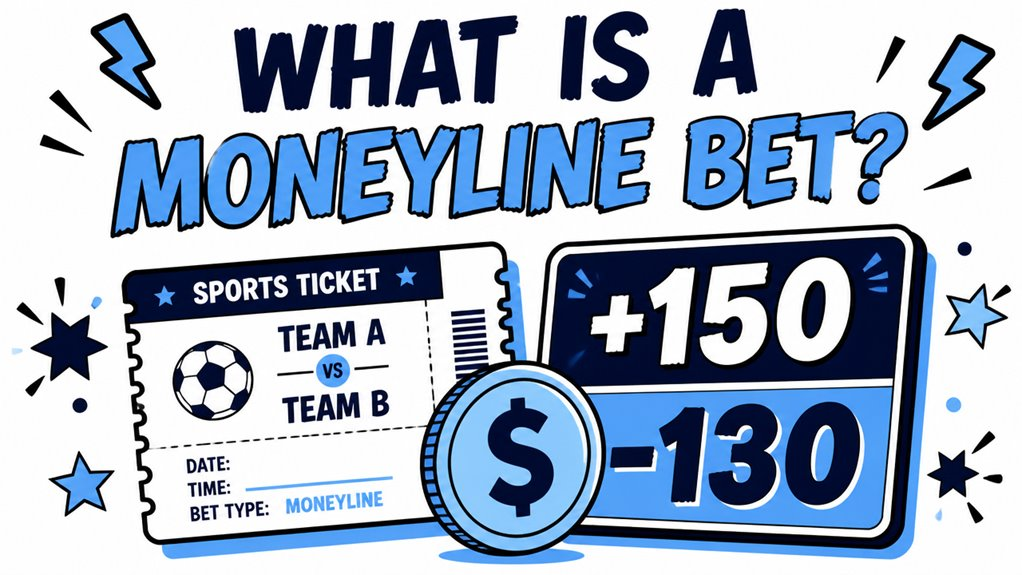
Favorites carry a negative sign, indicating the amount required to win $100. A -200 moneyline odds designation means $200 must be wagered for $100 in payouts. Underdogs carry a positive sign — a +150 line returns $150 profit on a $100 bet.
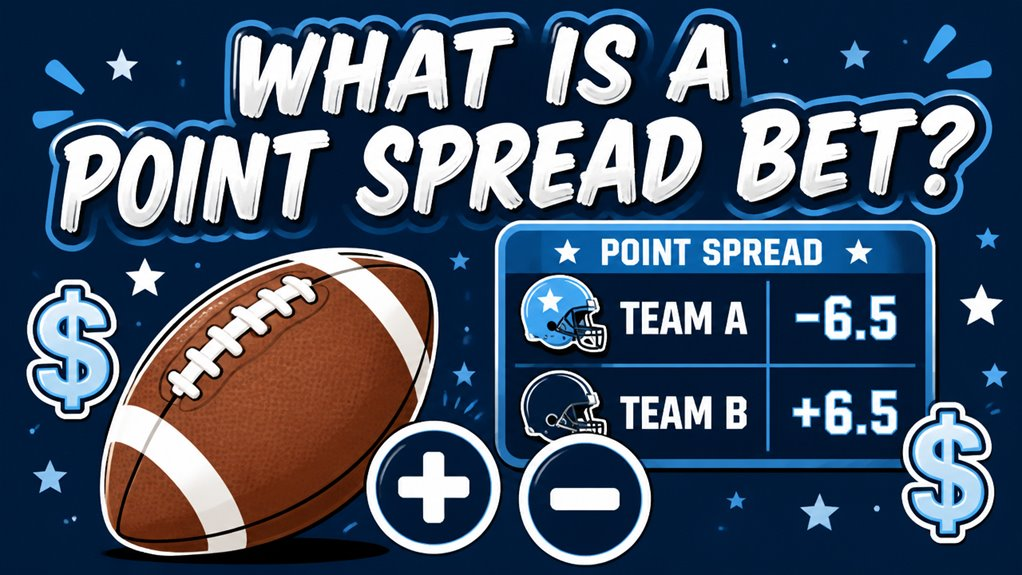
Point spread wagers require the favorite to win by a specific margin. A -6 spread demands a seven-point victory minimum. Totals require bettors to predict whether the combined total score exceeds or falls short of the bookmaker’s set line.
March Madness odds shift in real-time, responding to betting volume, injuries, and in-game developments.
How to Bet on March Madness Spreads?
Spread betting transforms lopsided March Madness matchups into competitive wagering propositions by assigning a point margin to each contest. When betting on NCAA basketball spreads, a favorite must win by more than the assigned margin, while an underdog can lose by less than that margin or win outright to cover the spread. Strategic wagering requires monitoring the betting market closely, as spreads shift based on injuries and team performance.
| Scenario | Spread | Result |
|---|---|---|
| Favorite wins by 15 | -11 | Covers |
| Favorite wins by 8 | -11 | Fails |
| Push occurs | -11 | Refund |
| Underdog loses by 7 | +11 | Covers |
| Underdog loses by 14 | +11 | Fails |
How to Bet on March Madness Moneylines?
Simplicity defines moneyline betting in March Madness, where the sole objective is selecting the outright winner of a game without factoring in point margins. In NCAA basketball, odds determine potential winnings based on each team’s status as favorites or underdogs. A favorite listed at -400 requires a $400 wager to yield $100 profit, while an underdog at +350 returns $350 on a $100 bet. Payouts reflect winning probability — favorites offer modest returns, whereas underdogs deliver significantly higher rewards. During March Madness, moneyline odds shift rapidly in response to injuries, team performance trends, and evolving betting patterns. Bettors must monitor these fluctuations consistently to capitalize on advantageous lines before adjustments occur, making real-time awareness a critical component of any effective moneyline betting strategy.
How to Bet March Madness Totals and Prop Bets?
Beyond selecting outright winners, March Madness betting extends into totals and prop bets, each offering distinct wagering frameworks. When betting on March Madness totals, a sportsbook establishes an over/under reflecting the projected combined points both teams will score. Bettors gambling on the over require the final combined points to exceed that threshold; falling short favors the under. An exact match results in a push, returning the original stake.
March Madness prop bets shift focus toward individual performances and granular game occurrences rather than final outcomes. Player statistics—such as total points, rebounds, or assists—serve as common prop bet markets. These wagers allow bettors to engage specific game dimensions independently of the result, providing analytically minded gamblers with precise, targeted opportunities throughout the tournament’s high-stakes environment.
How March Madness Futures Betting Works?
Futures betting represents one of March Madness wagering’s most distinct formats, requiring bettors to predict the tournament champion well before competition begins. Odds shift considerably throughout the season, influenced by team ranking, statistical performance, and evolving market sentiment. Early placement typically yields stronger odds, as the tournament scenery remains undefined and fewer bettors have committed positions.
Leading sportsbooks like FanDuel and DraftKings extend futures betting beyond outright champions, offering markets covering conference winners and player awards. Certain teams carry odds reaching +10000 or beyond, generating substantial potential payout for correctly identified long-shot champions. Bettors who analyze potential matchups and monitor injury reports alongside statistical performance gain measurable analytical advantages. Understanding how odds compress as March Madness approaches allows bettors to identify ideal entry points across multiple futures markets.
Live Betting March Madness Games in Real Time
Live betting transforms March Madness wagering into a dynamic, real-time exercise where odds shift continuously based on score differentials, player performances, and game-defining moments. Bettors placing real-time wagers must monitor momentum swings, media timeouts, and pivotal plays, as these events trigger significant odds adjustments across in-game betting markets.
Platforms like Bet365 provide extensive options including point spreads, moneylines, and totals that recalibrate throughout gameplay, rewarding analytically sharp bettors who recognize advantageous lines before they correct. Quick decision-making becomes crucial, as favorable odds windows close rapidly following impactful plays.
Successful live betting on March Madness demands deep comprehension of game flow, situational matchups, and team tendencies under pressure. Bettors who combine preparation with disciplined, fast execution consistently extract maximum value from an enhanced betting experience.
Smart Bankroll Habits for March Madness Betting
While real-time wagering demands split-second execution, sustainable March Madness betting ultimately hinges on disciplined bankroll management. Establishing a firm bankroll limit — allocating 1-5% per individual wager — forms the foundation of effective risk mitigation. Bettors who track bets meticulously, recording odds, stakes, and outcomes, facilitate informed adjustments that sharpen long-term betting strategy.
Critically, successful bettors avoid chasing losses. Impulsive stake increases following losing streaks undermine calculated wagering and accelerate bankroll erosion. Instead, maintaining consistent unit sizing preserves capital through inevitable variance.
Leveraging available bonus offers strategically extends March Madness betting potential without unnecessarily exposing personal funds. Furthermore, concentrating resources on select matchups to thoroughly research games — rather than diluting focus across dozens of bets — produces sharper, higher-confidence decisions and measurably stronger outcomes.