A moneyline bet is one of the most fundamental wagers in sports betting, requiring a bettor to predict only which competitor will win. No point spreads, no margins — just a winner. In spite of its apparent simplicity, the mechanics behind moneyline odds reveal layers of strategic depth that can significantly impact profitability. Understanding how these numbers actually function is where most bettors fall short.
Key Takeaways
- A moneyline bet is a wager on which team or player will win outright, with no margin-of-victory requirements considered.
- Odds are expressed as positive numbers for underdogs (+150) and negative numbers for favorites (-150).
- Negative odds show how much to wager to win $100; positive odds show profit earned on a $100 bet.
- Payouts combine your original stake plus profit, calculated differently depending on whether odds are positive or negative.
- Effective moneyline betting requires researching team performance, tracking odds changes, and managing your bankroll strategically.
What Is a Moneyline Bet?
A moneyline bet is one of the most fundamental wagers in sports betting, requiring bettors to predict only which team or player will win a game outright. Unlike point spread betting, this form of gambling eliminates margin-of-victory considerations entirely.
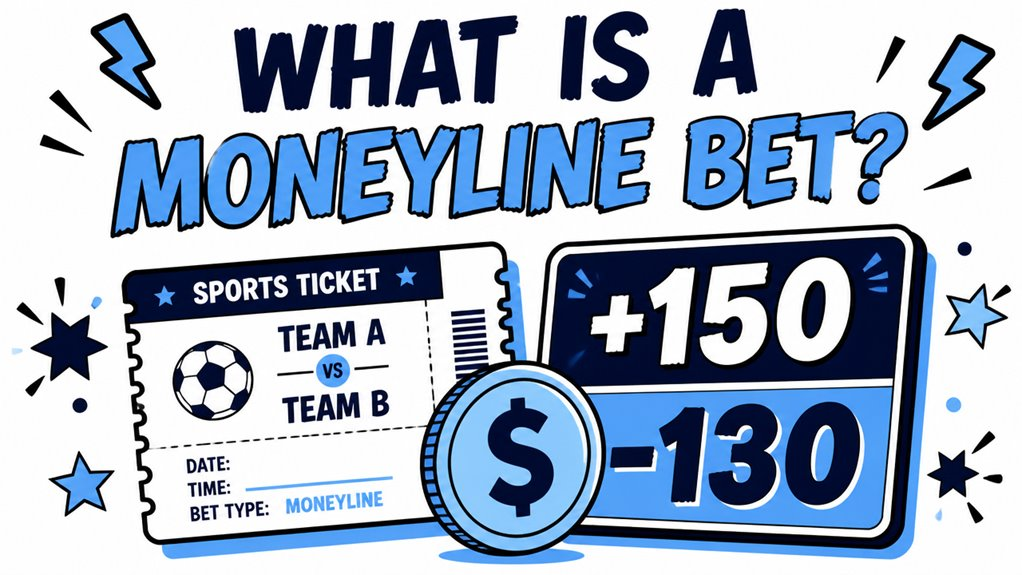
Odds are expressed in two formats: negative odds indicate the favorite, showing how much must be wagered to win $100 (e.g., -150), while positive odds represent the underdog, displaying the profit earned on a $100 bet (e.g., +200). A team carrying -150 odds requires a $150 wager to return $100 in profit.
Most sports present two possible outcomes, though soccer introduces a third with the draw option. Odds shift continuously based on injuries, team performance, and overall betting market activity.
How Moneyline Odds Actually Work
Understanding the mechanics behind moneyline odds requires moving beyond their surface-level presentation. Whether positive or negative, each number carries distinct meaning for favorites and underdogs alike. Negative odds indicate the amount required to win $100, while positive odds reflect potential payout on a $100 wager.
| Odds | Type | Implied Probability |
|---|---|---|
| -200 | Favorite | 66.67% |
| -150 | Favorite | 60.00% |
| +150 | Underdog | 40.00% |
| +200 | Underdog | 33.33% |
| +300 | Underdog | 25.00% |
This thorough guide establishes that implied probability directly connects moneyline odds to perceived winning or losing likelihood. Fluctuations driven by injuries or public betting trends continuously reshape these figures, altering risk and potential payout for every wager placed.
Favorites vs. Underdogs: Reading the Numbers
Two distinct numerical systems define the relationship between favorites and underdogs in moneyline betting. Favorites carry negative odds, such as -150, requiring a bettor to wager $150 to win $100. This structure reflects their higher probability of winning. Underdogs operate differently — positive odds like +200 mean a $100 bet to win yields $200 in profit, compensating for their lower likelihood of success.
In sports wagering, these numbers shift based on team strength, injuries, and prior performance. When both teams are expected to win at roughly equal rates, odds stabilize near -110 on each side — a pick ’em scenario. Moneyline bets ultimately translate perceived competitive advantages into precise numerical values, giving bettors a data-driven framework for evaluating risk against potential return.
How to Calculate Your Moneyline Payout
Once the relationship between favorites and underdogs is established through moneyline odds, the next logical step is determining exactly what a winning bet returns. Knowing how to calculate your payout depends entirely on the odds listed.
- Positive odds (+150): Multiply stake by odds, divide by 100; a $50 moneyline wager returns $125 total payout.
- Negative odds (-200): Multiply stake by 100, divide by the absolute value; a $50 bet returns $75.
- Implied probability: -150 odds suggest a 60% win likelihood; +150 indicates roughly 40%.
Bettors should note that betting volume and team performance cause odds to fluctuate, directly affecting potential payout at placement time. Total payout always includes the original stake plus profit.
Moneyline Bets vs. Point Spread Bets
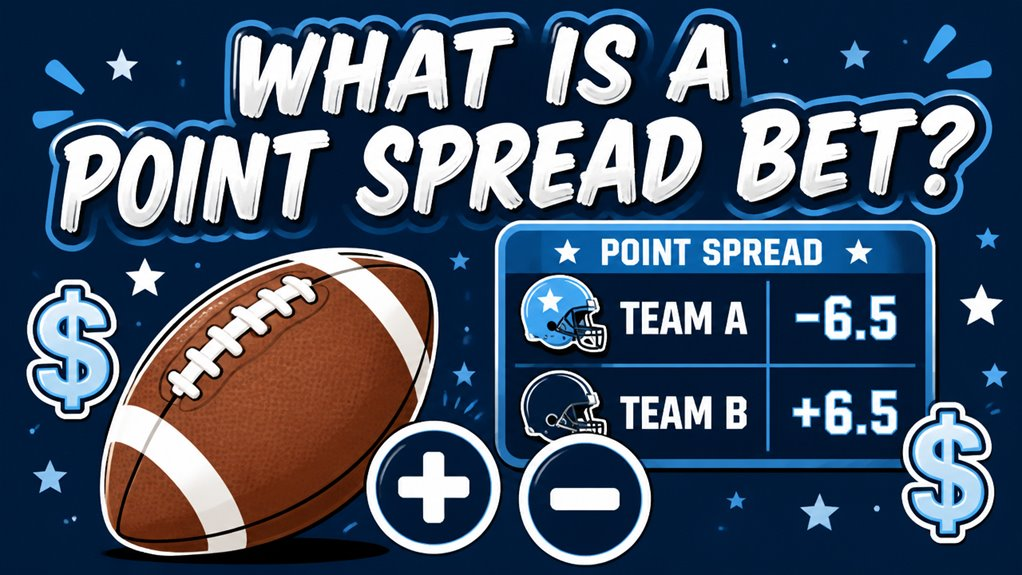
Choosing between a moneyline bet and a point spread bet comes down to one fundamental distinction: the moneyline requires only that a selected team wins outright, while the point spread demands a victory or defeat within a defined margin. In any game or event, odds determine how much a bettor would need to wager to generate a return. A favorite carrying -300 moneyline odds is considered highly likely to win, yet point spread bets may list the same team at -7, requiring a seven-point victory margin. Low-scoring sports favor moneyline betting because of unpredictable margins, while basketball and football commonly utilize point spreads. This extensive guide establishes that both formats serve distinct strategic purposes depending on team wins probability and expected scoring differentials.
When Does a Moneyline Bet Make Sense?
Moneyline bets carry the most strategic value when a bettor holds strong conviction in a team’s outright victory, independent of scoring margins, making them particularly well-suited for low-scoring sports like baseball and hockey where a single run or goal can define an entire contest. Unlike point spreads, moneyline bets simplify wagering by focusing solely on who wins.
Key scenarios where moneyline bets make sense include:
- Underdog value: Underdogs frequently offer favorable odds that reflect undervalued team performance, maximizing payout potential.
- Closely matched contests: Playoffs and evenly paired matchups eliminate the complications of point spreads entirely.
- Shifting betting lines: Injuries or late developments can create exploitable opportunities before game time.
Recognizing these situations positions bettors to utilize moneyline bets with calculated precision.
How to Place a Moneyline Bet Step by Step
Knowing when to place a moneyline bet is only half the equation — executing the wager correctly determines whether that strategic edge translates into action. Bettors should begin by selecting a sportsbook offering better odds and straightforward guidance. From there, locate the specific sport and identify the moneyline market for the chosen matchup. Clicking the odds associated with the preferred team or player registers the selection on the bet slip. The bettor then enters the desired stake on the bet and reviews the calculated payout before proceeding. Once satisfied, confirm your wager to finalize the position. Tracking the bet would then occur under the “Open Bets” section, where real-time updates on event outcomes allow bettors to monitor performance without straying away from their account dashboard.
What Does a +200 Moneyline Mean?
A +200 moneyline signals underdog status, indicating that a $100 wager returns $200 in profit alongside the original stake, producing a total payout of $300. This figure reflects the team’s lower perceived likelihood of victory compared to favorites carrying negative odds.
A +200 moneyline identifies an underdog, returning $200 profit on a $100 wager for a $300 total payout.
Key characteristics of a +200 moneyline bet include:
- Implied probability: The underdog win probability calculates to 33.33%, derived from 100 ÷ (200 + 100).
- Risk-reward ratio: Higher profit potential distinguishes underdog bets from lower-yielding favorite wagers.
- Odds fluctuation: The +200 line shifts based on injury reports, betting volume, and media developments before game time.
Bettors evaluating a +200 moneyline must weigh the heightened profit opportunity against the statistically lower probability of the underdog securing a win.
Best Sports for Moneyline Betting
While the +200 moneyline illustrates how odds reflect perceived probability, sport selection plays a similarly significant role in determining moneyline value.
Unlike a point spread bet, this type of wager focuses purely on outcomes—whether Team A wins or Team B wins. Low-scoring sports, UFC and boxing, and sports like soccer offer particularly strong moneyline betting markets.
| Sport | Moneyline Feature |
|---|---|
| Hockey | Low-scoring, no spread |
| Baseball | Simple win/loss focus |
| Soccer | Three-way draw option |
| UFC/Boxing | Individual fighter odds |
| NBA/NFL | Clear favorite/underdog |
College basketball and football likewise present competitive moneyline betting opportunities. Each sport carries distinct structural advantages, making sport selection a critical factor in maximizing moneyline value.