MLB betting requires a structured approach grounded in research and discipline. Bettors who understand the mechanics behind moneylines, run lines, and totals consistently outperform those who rely on instinct alone. Advanced metrics, proper bankroll management, and an awareness of league trends separate profitable bettors from the rest. The full breakdown of each bet type and strategy follows.
Key Takeaways
- MLB betting starts with understanding three main bet types: moneyline (picking a winner), run line (1.5-run spread), and totals (over/under).
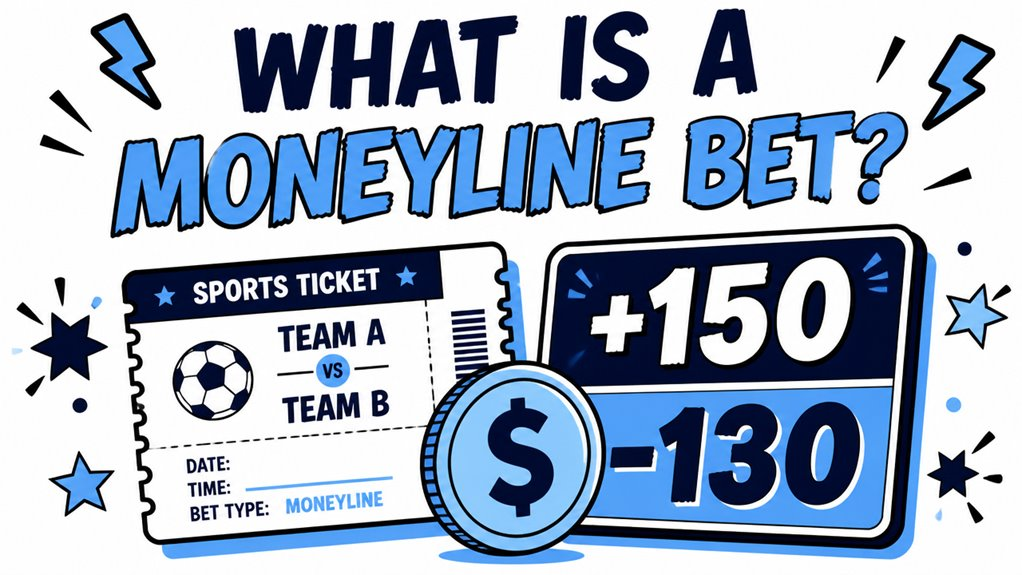
- Moneyline odds use three-digit figures; negative odds indicate favorites (-150), while positive odds indicate underdogs (+130).
- Analyze starting pitcher stats like ERA and WHIP, alongside bullpen strength and offensive metrics, before placing any bet.
- Advanced metrics like WAR and FIP provide deeper insight beyond basic stats, helping identify valuable betting opportunities others may overlook.
- Disciplined bankroll management and avoiding emotional decisions are essential for long-term, sustainable MLB betting success.
What Is the MLB Money Line and How Does It Work?
The MLB money line stands as the most crucial betting format in baseball, requiring bettors to select which team will win a game outright rather than covering a point spread. Odds appear as three-digit figures, with negative numbers identifying favorites and positive numbers identifying underdogs. A -150 line requires a $150 wager to return $100, while a +130 line yields $130 profit on a $100 bet. These figures reflect starting pitcher matchups, team performance metrics, and prevailing game conditions. Among critical betting tips, bettors should note that all MLB bets carry “action” status, meaning wagers remain valid even when a starting pitcher is scratched before first pitch. Understanding payout differentials between favorites and underdogs remains vital for structuring a profitable money line betting strategy.
How to Read and Bet the Run Line
Baseball’s run line functions as the sport’s equivalent of a point spread, standardized at 1.5 runs across virtually all MLB matchups. A run line bet requires the favorite to win by two or more runs, while underdogs can lose by one and still cover.
| Scenario | Outcome |
|---|---|
| Favorite wins by 2+ runs | -1.5 bet wins |
| Favorite wins by exactly 1 | -1.5 bet loses |
| Underdog wins outright | +1.5 bet wins |
| Underdog loses by 1 run | +1.5 bet wins |
| Tie after 9 innings | Bet loses |
In MLB betting, heavy favorites at -200 moneyline often present better value on the run line. Unlike total runs scored markets, run line odds adjust based on margin, not volume.
What Is the Over/Under in Baseball Betting?
While the run line centers on margin of victory, the Over/Under shifts focus entirely to run volume—specifically, the combined total runs scored by both teams in a game. Sportsbooks establish a projected total number of runs, and baseball bettors simply wager whether the final combined score will exceed or fall short of that figure. If the line sits at 9.5, the over requires at least 10 runs; the under needs nine or fewer.
When the final total matches the set line exactly, the bet is voided and stakes are refunded. Lines adjust pre-game based on pitching matchups, team trends, and weather. Critically, a minimum of nine innings—or 8.5 with the home team leading—must be completed for Over/Under wagers to be officially graded.
How to Bet the First 5 Innings Line
Many bettors find the First 5 Innings (F5) line appealing as it isolates starting pitcher performance, stripping out bullpen variance that often complicates full-game wagering. By focusing exclusively on the first five innings, this market facilitates sharper analysis of specific pitcher matchups, offering a more controlled betting environment.
F5 run lines and totals operate similarly to full-game equivalents, though tied outcomes result in refunds, eliminating risk in certain scenarios. This push mechanic distinguishes F5 wagering from standard run lines, where no such safety net exists.
Bettors should note that full-game run lines and totals require a minimum of nine innings, or 8.5 if the home team leads. Odds frequently mirror full-game lines, making independent starting pitcher evaluation crucial for identifying legitimate value within this market.
MLB Prop Bets: Strikeouts, Hits, and Player Totals
MLB prop bets represent one of the most granular wagering markets available, enabling bettors to isolate individual player performance metrics rather than relying on team-level outcomes. Three core prop categories demand analytical attention:
- Strikeouts — Elite starters like Gerrit Cole typically carry lines between 7.5–9.5, heavily influenced by opposing lineup quality.
- Hits — Lines are often set at 1.5 or 2.5, requiring evaluation of recent form and pitcher-batter history.
- Player totals — Combined hits + runs + RBIs lines, usually 1.5 or 2.5, reflect overall offensive productivity.
Bettors must likewise account for situational variables. Ballpark dimensions and weather conditions meaningfully shift player totals outcomes, making contextual research as critical as raw statistical analysis when evaluating strikeouts and related prop bets.
How MLB Parlays and Futures Bets Work
Parlays and futures represent two structurally distinct bet types that reward risk tolerance with amplified returns. Parlays combine multiple game outcomes into one wager, multiplying odds across each selection. Nevertheless, every leg must win — a single loss eliminates the entire bet. The difficulty compounds with each added game, making discipline in selection critical.
Futures bets operate on a seasonal timeline, targeting outcomes such as World Series winners or MVP recipients. Odds shift dynamically based on injuries, team performance, and standings throughout the year. Early positioning on undervalued teams frequently yields the strongest returns.
Bettors should systematically compare sportsbooks, as promotional boosts specifically targeting parlays and futures bets can meaningfully improve payout structures, making platform selection a measurable competitive advantage.
Where to Bet on MLB Games Online
Several major sportsbooks dominate the online MLB betting market, with DraftKings, FanDuel, BetMGM, Caesars, and BetRivers standing as the most operationally robust platforms available. These sportsbooks allow bettors access to money lines, run lines, totals, props, and live betting markets. Where legalized sports betting operates, users can bet efficiently through each platform’s dedicated MLB tab.
Three critical platform distinctions worth noting:
- Age and location requirements — Most sportsbooks allow wagering only for users aged 21+ in legally compliant states.
- Competitive odds — Platforms actively compete on pricing, rewarding bettors who compare lines across multiple sportsbooks.
- Enhanced features — Live betting and player prop markets, particularly at Caesars and BetRivers, provide expanded strategic betting opportunities beyond standard pre-game markets.
House Rules Every Baseball Bettor Should Know
Before placing any MLB wager, bettors must understand the house rules that govern how sportsbooks grade outcomes—rules that can mean the difference between a winning ticket and a voided bet. For totals and run line bets, most books require a game to complete at least 8.5 innings when the home team leads. Winning money line bets, nonetheless, are graded based on the last completed inning, regardless of weather-shortened outcomes. If a selected starting pitcher is scratched pre-game, bettors receive a full refund. Ties on totals or run line results are classified as “No Action,” triggering automatic refunds. Prop bet rules vary significantly between sportsbooks, making pre-wager review crucial. Understanding these house rules eliminates costly surprises and supports more disciplined betting decisions.
Three MLB Betting Tips to Improve Your Edge
Armed with a clear understanding of house rules, bettors can sharpen their approach by applying three targeted strategies to gain a measurable edge.
- Evaluate starting pitchers using advanced metrics like FIP and xERA rather than ERA alone, revealing true effectiveness against right-handed or left-handed lineups.
- Factor in ballpark conditions before betting totals, as venues with favorable offensive dimensions inflate run scoring, directly shifting over/under value.
- Track team performance trends through August, when fatigue and roster fluctuations destabilize even elite rosters, creating exploitable inefficiencies in money line pricing.
Bettors targeting starting pitchers should additionally consider First 5 Innings lines, isolating individual performance from unreliable bullpen contributions. Combining pitcher analysis with situational team performance data produces a more disciplined, data-driven betting framework.